
Everything You Need to Know About Metal-Ceramic Crowns
Some patients enjoy innovations in dentistry, while others prefer timeless classics — among them, metal-ceramic (porcelain-fused-to-metal, PFM) crowns. These restorations have long been popular thanks to their affordability and high strength. However, despite these advantages, metal-ceramic crowns also have drawbacks, which we will discuss below.
What a metal–ceramic crown looks like and what it consists of
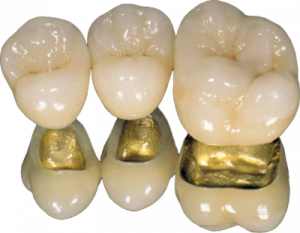
A metal–ceramic crown has two layers: a metal substructure that serves as a framework (a cap placed over the tooth), and a ceramic layer applied over the metal to provide aesthetics.
Thanks to the metal base, the crown is securely retained on the tooth and is highly wear-resistant, while the ceramic is colour-matched to your teeth so closely that it is almost indistinguishable.
Which metals are used for metal-ceramic crowns
Today, several metals (or alloys) are used for crowns:
- Nickel. A flexible, easy-to-work-with material, but it may cause allergic reactions.
- Cobalt–chromium. An optimal choice in terms of biocompatibility and price. It does not cause allergies and helps prevent dental caries.
- Molybdenum. Not used in pure form; added to alloys to increase elasticity.
- Titanium. A hypoallergenic material, but relatively expensive, so used less frequently.
- Gold. Gold crowns are now made to order due to the high cost of the metal; nevertheless, they are considered an excellent solution because they are highly biocompatible with the human body.
In contemporary dentistry, cobalt–chromium alloys are most often used to fabricate metal–ceramic crowns because they offer a relatively modest price and good functionality. In the past, gold was also used for crowns and offered excellent aesthetic and strength characteristics. Later it was combined with platinum, and in time noble metals were abandoned altogether due to sharp price increases. As a result, cobalt–chromium crowns became the most practical option: while not the most aesthetic, they are reliably strong.
Functionality of metal-ceramic crowns
The price-to-quality ratio is well justified for this material, so during prosthetic treatment many dentists and patients prefer it.
Metal-ceramic crowns are frequently placed on posterior (chewing) teeth and are also used in bridgework. Therefore, if you need a dental bridge, the only viable option here is metal–ceramic, which does not bend and can withstand high loads.
Advantages of metal-ceramic crowns:
- Help prevent dental caries;
- Affordable price;
- High strength;
- Long service life;
- Stable colour.
Why metal-ceramic teeth are not always the best option

Metal-based crowns tend to be relatively bulky, as multiple ceramic layers are required to mask the bluish tint of the metal. The cap can be 1.5–2 mm thick, which necessitates substantial tooth reduction and therefore greater invasiveness.
Anterior (front) teeth. For the anterior zone, PFM is inferior in aesthetics to all-ceramic options; it may be used with an appropriate margin design (porcelain butt-margin), but all-ceramic restorations are more often preferred.
Another significant drawback is the potential for a bluish hue to appear at the gum line as the gingiva thins. With gingival recession or chipping of the veneering ceramic, the metal/finish line may become visible, in which case aesthetic periodontal work to rebuild the gum may be required — an additional and not insignificant expense.
Disadvantages of metal-ceramic crowns:
- High invasiveness;
- Possible bluish discolouration at the gingival margin;
- Some alloys may provoke allergic reactions;
- Root canal treatment is mandatory if the tooth is vital;
- Enamel wear on neighbouring teeth;
- Potential increased wear of opposing teeth if the ceramic is rough or unpolished; this risk is reduced with correct glazing and polishing.
Contraindications to placing a metal-ceramic crown
- Dental caries and periodontal disease;
- Metal allergy;
- Not indicated for children and adolescents;
- Increased tooth wear.
How a crown is placed and how long it takes
The procedure consists of several stages:
- Consultation and examination;
- Dental treatment and nerve removal with canal obturation (if indicated);
- Anaesthesia and tooth preparation (reduction);
- Silicone impressions or intraoral scanning; digital shade matching is possible;
- Placement of a temporary crown while the laboratory fabricates the definitive one;
- Placement of the permanent crown;
- Cementation: fixation with a glass-ionomer (or resin-modified glass-ionomer) cement or a resin cement — according to clinical indications.
In general, the entire process takes around 2–3 weeks, depending on case volume and the laboratory workflow; multiple units increase the overall timeframe.
How a metal–ceramic crown is fabricated

- A metal framework is cast from the chosen alloy (or noble metal). Its shape is tried in and adjusted according to the stone model created from your dental impression.
- A ceramic layer is applied and then fired to mask the metallic shade. Artistic characterisation follows to achieve a natural tooth colour and translucency, with subsequent layering of ceramics.
- Final stage: furnace glazing and polishing, with occlusal adjustment to refine the bite and surface finish.
Indications and limitations
Indications: extensive restorations of tooth structure, cracks, restoration of form/vertical dimension, and use as bridge abutments.
Limitations: marked bruxism without a protective night guard, thin gingival biotype (aesthetic risk), and very high expectations for translucency.
Caring for a metal-ceramic restoration
Metal–ceramic crowns are low-maintenance, so care is the same as for natural teeth: brush twice daily and use an irrigator and dental floss. For bridges, clean under the pontic with super-floss/interdental brushes and/or an irrigator. Professional hygiene and check-ups are recommended once or twice a year. It is best to avoid whitening and high-RDA abrasive toothpastes, as they may damage the outer ceramic layer.